

More news on this day
International travellers flying between India, Iran, Saudi Arabia and Europe are facing longer journeys, higher ticket prices and an elevated risk of last-minute disruption as conflict-linked airspace restrictions across the Middle East continue to reshape global flight paths in 2026.
Get the latest news straight to your inbox!
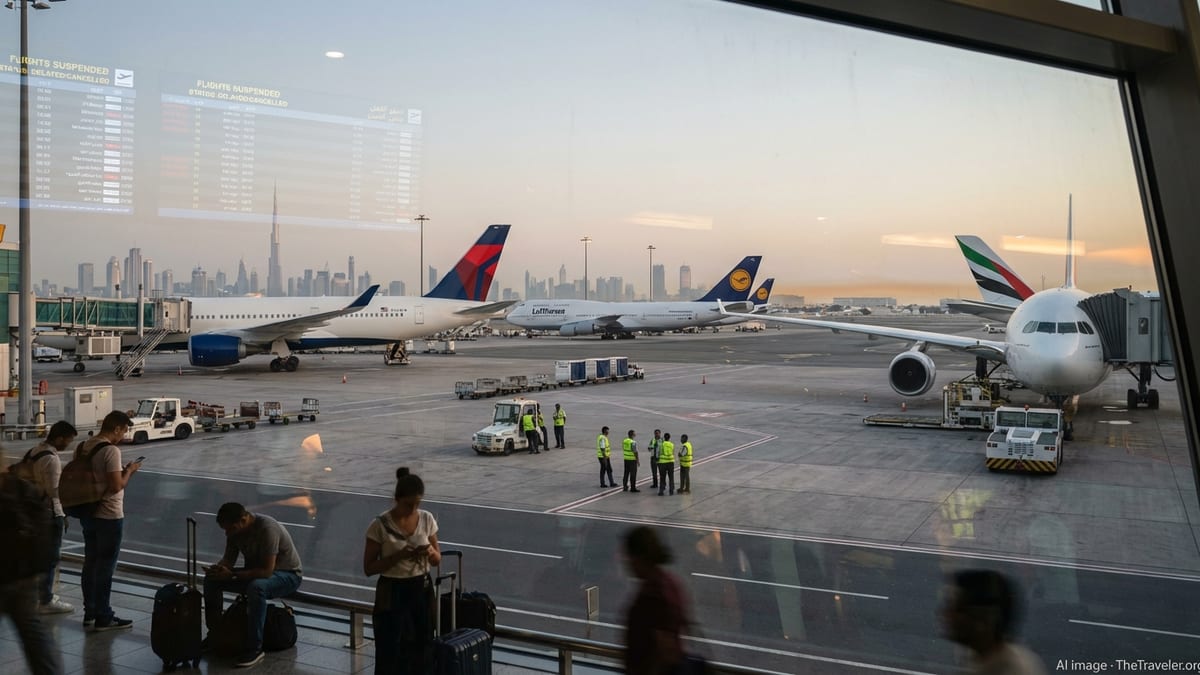
Strategic Airspace Closures Ripple Across Global Routes
Flight operations data and published aviation analyses show that airspace closures and restrictions spanning Iran, Iraq, Israel and parts of the Gulf since late February 2026 have disrupted some of the world’s busiest long haul corridors between Europe, South Asia and Australasia. Temporary shutdowns of airspace and hub airports in the United Arab Emirates, Qatar and neighboring states have periodically forced wide detours or outright cancellations on services linking India, the Middle East and Europe.
According to recent conflict and aviation briefings, the initial wave of full closures at the end of February left hundreds of thousands of passengers stranded and triggered broad rerouting of overflights that would typically track across Iran or Iraq on their way between Europe and destinations such as Delhi, Mumbai and Bengaluru. Although some airspace has since partially reopened, many airlines are maintaining wider safety buffers and avoiding designated conflict zones, effectively reducing the number of usable high altitude corridors across the region.
Industry outlook reports released in April indicate that the disruption is now less about one-off closures and more about a structural reconfiguration of how airlines connect Europe with India and the wider Asia Pacific region. Carriers are increasingly embedding longer flight times into their schedules and designing networks around narrower, more southerly or northerly routings that skirt Iranian and adjoining airspace, a shift that is expected to persist even if ceasefire efforts hold.
India–Europe Flights Grow Longer And Less Predictable
India to Europe services are among the most exposed to the Middle East airspace crunch. Before the latest escalations, many non stop and one stop routes relied on relatively direct tracks across Iran or neighboring flight information regions, offering competitive block times between key city pairs such as Delhi to London or Mumbai to Frankfurt. Current routing patterns show a marked move to longer paths via Central Asia, the Caucasus or southern arcs over Egypt and Saudi Arabia.
Publicly available airline schedules and tracking data suggest that some India–Europe flights are now adding 45 to 90 minutes of extra flying time compared with pre crisis norms, depending on the day’s airspace configuration and congestion along the remaining corridors. Extended routings can also limit the payload that widebody aircraft can carry, especially during hot season departures from heavily loaded airports, creating additional pressure on seats and cargo capacity.
In parallel, India’s aviation regulator has advised domestic carriers to avoid specific high risk sectors of West Asian and Persian Gulf airspace, prompting temporary suspension or retiming of certain services to the region and onward European connections. While airlines are incrementally restoring links and deploying extra flights on trunk India–Europe routes to clear backlogs where feasible, travellers are being urged through public advisories and airline notices to monitor schedules closely and anticipate rolling changes.
Fares Rise As Fuel, Insurance And Capacity Costs Climb
The rerouting of long haul flights away from direct Middle Eastern overflights is translating into significantly higher operating costs. Aviation risk consultancies estimate that diverting a Europe to Asia or India service onto a longer corridor can add roughly 90 to 180 minutes of extra flying, depending on the alternative path chosen. Every additional hour in the air for a widebody jet can add several thousand dollars in fuel, crew and navigation charges, a burden that airlines are beginning to pass through to passengers.
War risk insurance premiums for relevant portions of Middle Eastern airspace have also climbed sharply since 2023, with recent guidance suggesting increases of 50 to 500 percent in some conflict adjacent flight information regions. Even when aircraft do not transit the highest risk zones, the overall cost of insuring fleets that operate in nearby skies has risen, further squeezing margins on thin long haul routes between India, the Gulf and Europe.
Fare tracking by specialist business and premium travel outlets indicates that economy and business class prices between major European hubs and Indian metros have jumped since the February shutdowns, particularly on dates where capacity has been cut or aircraft types downgraded. On some peak travel weeks, round trip fares in premium cabins via the Middle East are reportedly several hundred to more than a thousand dollars higher than typical levels for the same season in recent years.
Analysts note that airlines are also trimming or consolidating frequencies to cope with the new constraints, withdrawing older or less efficient aircraft and prioritising the most profitable city pairs. This capacity discipline, combined with robust underlying demand for India and Gulf travel, is likely to keep average fares elevated in the near term even if fuel prices moderate.
Saudi Arabia, Gulf Hubs And Europe Adjust To New Corridors
Saudi Arabia and other Gulf states occupy a central position in the evolving map of safe corridors. While recent bulletins from European and international aviation bodies have at times urged additional caution around certain parts of Middle Eastern airspace, Saudi-controlled routes remain a critical southern option for airlines that no longer wish to fly across Iran or northern conflict zones. As a result, high altitude traffic density over parts of Saudi Arabia and Egypt has risen, with some airlines re timing flights to avoid peak congestion.
The region’s big connecting hubs, including Dubai, Abu Dhabi and Doha, have been particularly affected by intermittent restrictions and capacity caps. Published reports describe temporary limits on the number of daily flights foreign carriers can operate into certain airports while local authorities and airlines manage airspace, staffing and ground congestion. Some long haul carriers have responded by rerouting traffic flows through alternative hubs in Europe or South Asia, or by extending mid haul flights to operate as through services that bypass Gulf connections.
European airports and airlines are simultaneously adapting to less predictable arrival and departure patterns from the east. Longer routings and shifting departure waves from India and the Gulf have knock on effects for slot coordination, crew rotations and onward connections to North America and within Europe. Network planners in several major airline groups are reported to be reworking schedules for the upcoming peak season to allow more buffer time, which may slightly reduce the number of daily rotations that individual aircraft can perform.
What International Travellers Should Expect In The Months Ahead
For travellers planning journeys between India, Iran, Saudi Arabia and Europe in the coming months, the evolving airspace situation means building in extra time, flexibility and price sensitivity. Published travel guidance from aviation and safety organisations recommends anticipating longer block times on itineraries that would previously have crossed central Middle Eastern airspace, and considering the potential for missed connections if minimum connection times are tight.
Experienced trip planners suggest that passengers check whether their ticket is on a single booking reference, which generally offers stronger protection if a delay on one leg causes a missed onward flight. It is also advisable to monitor airline apps and alerts frequently in the 48 hours before departure, as schedule changes and equipment swaps are more common while carriers experiment with routings and adjust to shifting restrictions.
Travel insurance policies should be reviewed carefully, since not all products cover disruptions arising from conflict related airspace closures or government directives. Some specialist policies and higher tier products may offer broader protection, including coverage for additional accommodation and rebooking costs if flights are cancelled or significantly rerouted, but coverage terms vary widely.
Above all, industry outlooks stress that the current pattern of longer routes, higher operating costs and selective capacity cuts is unlikely to unwind quickly, even if ceasefire initiatives gain traction. For now, international travellers on India, Iran, Saudi Arabia and Europe routes should be prepared for elevated fares, longer flight times and a more volatile operating environment than they may have experienced on the same journeys just a few years ago.