

More news on this day
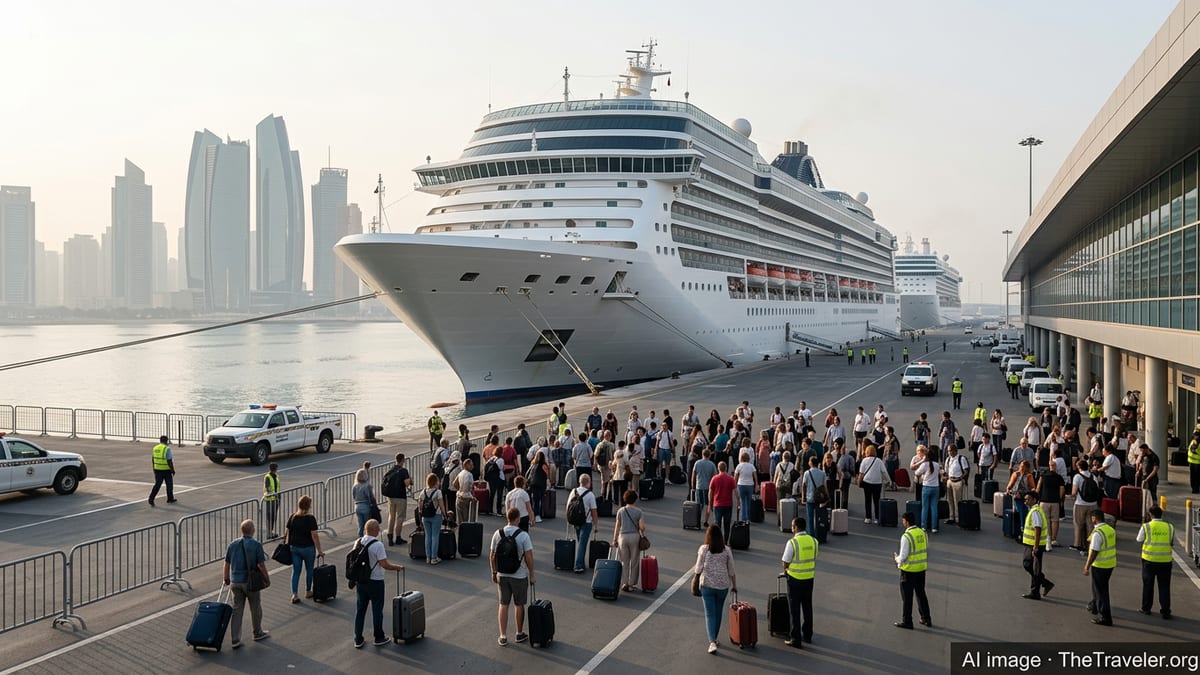
France is managing a high-profile norovirus outbreak on a British-operated cruise ship docked in Bordeaux, where hundreds of asymptomatic passengers have been allowed to disembark under tightened health protocols after more than 60 people fell ill with gastrointestinal symptoms.
Get the latest news straight to your inbox!
Lockdown on the Garonne as Tests Confirm Norovirus
The cruise ship Ambition, operated by British line Ambassador Cruise Line, arrived in Bordeaux on Tuesday, May 13, as part of a 14-night itinerary from Belfast and Liverpool with planned calls in northern Spain and along France’s Atlantic coast. Local reports indicate that shortly after docking, French health authorities in the Gironde region halted all disembarkation when dozens of passengers reported vomiting and diarrhea consistent with acute gastroenteritis.
Initial assessments treated the incident as a suspected outbreak, with more than 1,700 passengers and crew instructed to remain on board while medical teams boarded the vessel and collected samples. According to publicly available information from regional authorities and international media coverage, laboratory analysis at Bordeaux University Hospital subsequently confirmed the presence of norovirus, a highly contagious pathogen often linked to cruise ship outbreaks.
By Thursday morning, operator updates cited in news reports indicated around 60 passengers and four crew were experiencing symptoms, while the majority of those on board remained unaffected. Local statements described the clinical picture as non severe, with sick travelers receiving care from the ship’s medical team in isolation cabins rather than being transferred to hospitals on shore.
Norovirus is frequently described in public health literature as one of the most common global causes of gastroenteritis and is notorious for its ability to spread rapidly in enclosed environments such as cruise ships, schools, and long term care facilities. The outbreak on Ambition has quickly become a test of France’s post pandemic readiness to contain highly transmissible but typically short lived viruses in busy international ports.
Asymptomatic Travelers Cleared to Disembark Under Tight Controls
After an initial full lockdown of the ship, the health strategy shifted once norovirus was confirmed and case numbers appeared contained. From Wednesday afternoon, regional officials allowed passengers and crew without symptoms to go ashore, while those who were sick or had recently been ill were ordered to remain in isolation on board.
Published coverage from outlets including the Associated Press, The Guardian, and European broadcasters indicates that disembarkation has been tightly managed, with portside interactions limited and additional cleaning measures introduced in passenger areas and gangways. Shore excursions scheduled for Thursday were reported to be operating for healthy guests, suggesting a controlled but largely resumed tourism program in Bordeaux.
Local authorities have consistently stressed that there is no established link between the Ambition incident and a separate, widely reported hantavirus outbreak on another European cruise vessel. That clarification has been important for travel industry stakeholders seeking to prevent broader alarm about multiple unrelated infectious threats appearing in the cruise sector at the same time.
Ambition is expected to remain in Bordeaux before continuing its voyage on a revised itinerary designed to avoid rough weather in the Bay of Biscay, a change that also gives crew additional time to maintain reinforced hygiene measures on board. The operator has publicly emphasized enhanced disinfection, modified buffet service, and reminders to passengers about hand hygiene and prompt reporting of symptoms.
Debate Over Disease Control and Passenger Freedom
The decision to confine more than 1,700 people on the ship for over 24 hours and then selectively allow asymptomatic travelers off has reignited discussion about how ports should respond to gastrointestinal outbreaks in the post Covid era. Public health guidance circulated in recent years often recommends keeping symptomatic passengers isolated for at least 48 hours after their last symptoms, while allowing those who remain well to disembark under heightened sanitation protocols.
In Bordeaux, the evolving response appears to mirror that approach. Early precautionary confinement allowed time for testing and contact assessment, while the subsequent relaxation for healthy passengers reflects a balance between reducing transmission risk and avoiding prolonged, economically damaging shutdowns of tourist traffic. Social media posts and interviews cited in UK and Irish media portray many passengers as treating the lockdown as an inconvenience rather than a crisis, with on board activities continuing during the waiting period.
Travel industry analysts note that norovirus rarely leads to severe outcomes in otherwise healthy people, but its reputation for explosive spread and unpleasant symptoms can undermine consumer confidence quickly. The handling of Ambition in Bordeaux will likely be watched closely by other European ports, which face similar decisions about when to hold ships, when to let asymptomatic travelers go ashore, and how to communicate risk without causing undue alarm.
The situation also highlights the complexity of distinguishing between different pathogens on ships. With recent headlines focused on hantavirus, Covid variants, and other respiratory and hemorrhagic diseases, clarifying that the Bordeaux incident involves a common gastrointestinal virus rather than a rarer and more serious infection has been a key part of the public messaging.
Cruise Industry Under Renewed Scrutiny
The Ambition outbreak comes at a time when cruise operators are working to rebuild passenger numbers and reassure travelers after years of pandemic related disruption. Data from the United States Centers for Disease Control and Prevention and European health agencies show that cruise ship gastrointestinal outbreaks, most often caused by norovirus, have continued to surface as cruise traffic rebounds.
Industry guidance documents and health protocols generally call for aggressive cleaning, rapid isolation of ill passengers, suspension of self service buffets, and detailed reporting to national health authorities when case counts cross defined thresholds. The response in Bordeaux appears broadly aligned with these measures, including direct involvement of regional health teams and on board containment for those who are sick.
For French tourism officials and local businesses in Bordeaux, the incident is a reminder that cruise arrivals come with both economic benefits and public health responsibilities. Restaurants, tour operators, and transport providers rely heavily on ship based visitors, yet they are also on the front line of any potential spread once passengers step ashore.
Travelers booked on upcoming European sailings may now look more closely at outbreak reporting, ship sanitation scores, and operators’ transparency around illness on board. While norovirus episodes are not new to cruising, the rapid global circulation of health news means that events in one port can quickly influence perceptions far beyond the affected region.
Implications for Travelers Planning European Cruises
For prospective passengers, the norovirus incident in Bordeaux serves as a practical case study in how outbreaks are managed today. Publicly available guidance from health agencies typically encourages simple but consistent precautions, including frequent handwashing with soap and water, using alcohol based sanitizers when handwashing is not feasible, and avoiding close contact with anyone showing signs of vomiting or diarrhea.
Travel health experts often suggest that travelers consider purchasing insurance that covers medical care and trip disruption related to illness on board, as quarantines and port changes can lead to unplanned expenses. In the Bordeaux case, the ship’s itinerary has already been adjusted, and there is always the possibility that subsequent port calls may place additional conditions on disembarkation if cases persist.
At the same time, the decision to allow asymptomatic travelers to leave the ship under strict protocols indicates that European ports are increasingly trying to avoid blanket shutdowns when targeted measures may be sufficient. For many travelers, the key question is less whether outbreaks occur and more how transparently they are handled and how quickly normal operations can resume once the situation is assessed.
As Ambition prepares to depart Bordeaux and continue its shortened route, the episode underscores a new reality for cruise travel in Europe. Infectious disease management is now a central part of the cruising experience, and ports like Bordeaux are becoming testing grounds for how to keep tourism moving while minimizing health risks in an era of heightened global vigilance.