


More news on this day
Iran has linked any reopening of the Strait of Hormuz to Washington meeting a set of political and economic conditions, as the United States renewed a wide-ranging West Asia travel alert that urges Americans to exercise heightened vigilance across multiple countries amid the risk of rapid escalation.
Get the latest news straight to your inbox!
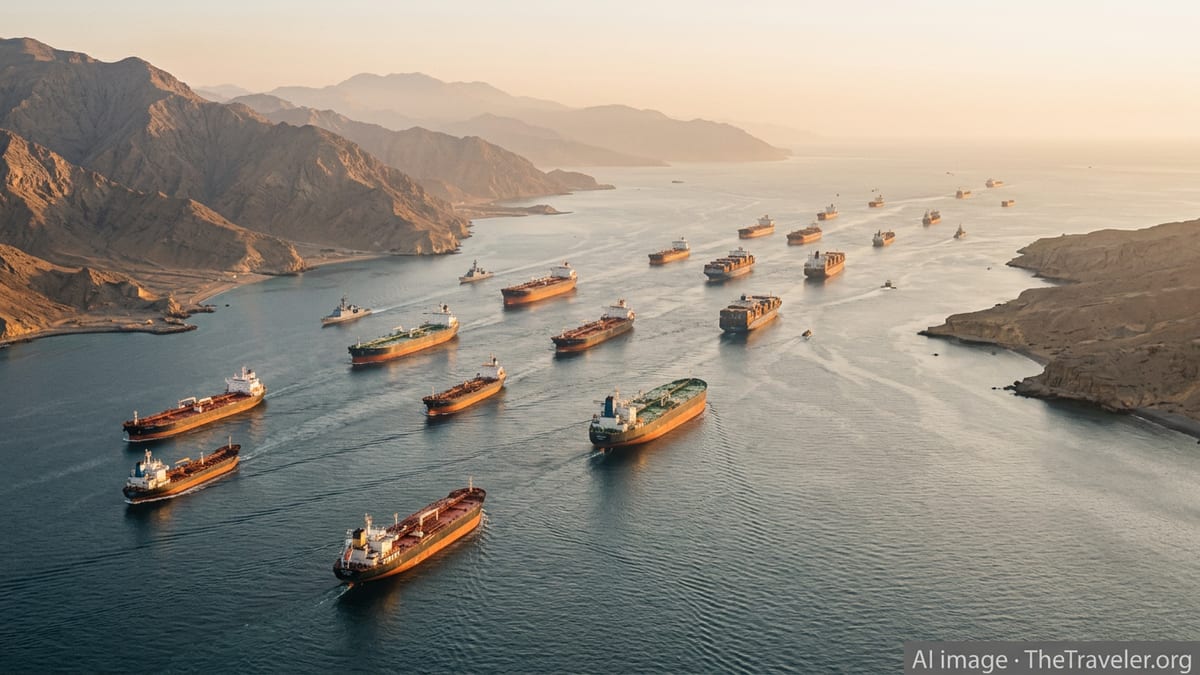
Hormuz leverage remains central to the standoff
Published coverage over the past week indicates that Iranian leaders and institutions have reiterated a position that shipping normalcy through the Strait of Hormuz will not return until the US meets specific conditions. The strait, a narrow maritime corridor between Iran and Oman, is a critical chokepoint for global energy flows and a key route for container shipping linking Gulf ports with markets in Asia, Europe, and North America.
Reports describe an Iran-Oman understanding that sets out a basis for managing traffic but does not amount to an immediate reopening. The distinction matters for travelers and travel-related businesses because even limited disruption in Hormuz can ripple quickly into aviation fuel costs, cruise itineraries that reposition via the Gulf, and the operational decisions of carriers serving hubs such as Doha, Dubai, Abu Dhabi, and Muscat.
Separately, coverage has pointed to repeated incidents and military activity near vital sea lanes, including maritime encounters involving US forces and Iranian vessels. Even when commercial ships continue to move, uncertainty around routing, insurance, and security procedures can create delays and surge pricing that affects everything from freight schedules to tour operator costs.
What Iran says must happen before traffic normalizes
Multiple reports in recent weeks have described Iranian demands as broader than ship-transit mechanics. The stated conditions discussed in published reporting include steps tied to ending active hostilities across multiple fronts, the release of frozen Iranian assets, and changes to maritime pressure around Iranian ports. Other reported demands include sanctions relief and compensation linked to war-related damage.
How these conditions are framed publicly can shift, but the throughline is that Tehran has treated the strait as leverage in a wider negotiation rather than a standalone maritime arrangement. That approach keeps uncertainty elevated for commercial operators, particularly those dependent on predictable Gulf schedules such as regional ferries, cruise lines planning Middle East seasons, and airlines coordinating cargo and passenger flows.
For travelers, the practical implication is not that tourism boats transit Hormuz directly, but that a prolonged period of tension can increase the likelihood of last-minute route adjustments, airspace restrictions, and changes to port calls in the broader region, especially if security activity expands beyond the immediate area.
US renews broad West Asia travel alert amid escalation risk
US government travel messaging has again emphasized a heightened-risk environment across West Asia, with public advisories urging increased caution in multiple destinations. This kind of region-wide alert does not automatically mean travelers must cancel trips, but it is a signal to plan for disruptions, closely monitor official updates, and review contingency options such as refundable bookings and flexible change policies.
At the country level, State Department travel advisories vary by destination and can shift quickly. For example, published advisory pages in mid-September included a Level 3 “Reconsider travel” designation for Saudi Arabia, reflecting a risk environment shaped by security threats and regional spillover.
For US citizens already in the region, the most actionable steps are typically logistical rather than speculative: ensure travel documents are current, keep emergency contacts and airline details accessible, confirm insurance coverage for trip interruption, and monitor carrier notifications in case schedules change.
What this could mean for flights, cruises, and trip planning
Travel impacts from a Hormuz-related standoff are often indirect. Aviation is sensitive to jet fuel costs and route planning, and Gulf hubs function as major connectors for itineraries between the US, Europe, Africa, and Asia. When security risk rises, airlines may adjust routings, which can lengthen flight times, tighten connection windows, or trigger schedule changes.
For cruises and small-ship itineraries marketed around the Arabian Peninsula and Gulf cities, heightened military activity or warnings can lead to itinerary substitutions, altered port calls, or additional security procedures at embarkation. Tour operators may also reprice or restructure packages if transportation costs or insurance terms change.
For travelers with near-term plans to the Gulf, Jordan, Egypt, or onward connections through major hubs, the most practical approach is to treat the situation as dynamic: choose fares with change flexibility where possible, avoid overly tight same-day international connections, and check official advisory language for each country on the itinerary rather than relying on general regional headlines.
Diplomacy continues in parallel with security risks
Published coverage indicates diplomatic engagement has continued alongside the maritime and regional security tensions, including meetings linked to the United Nations gathering in New York. Those talks have been framed publicly as part of a broader attempt to manage the conflict and address conditions tied to maritime access and de-escalation.
Even with diplomacy active, the near-term outlook for travelers remains shaped by the possibility of sudden developments. When security environments are described as “complex” with potential for “unforeseen escalation,” travelers should expect that advisories, airline operations, and local regulations can shift quickly, sometimes within hours.
For now, the key travel takeaway is that the Strait of Hormuz remains both a strategic pressure point and a practical risk factor: its status can influence the region’s transportation networks, the cost of travel, and the likelihood of disruptions, even for trips that never go near the waterway.