


More news on this day
Greek travel guidance urging citizens to avoid non-essential trips to the wider Middle East is echoing through the cruise sector, with regional operator Celestyal adjusting winter deployment plans and expanding new Mediterranean programs in place of some Gulf and broader Middle East itineraries.
Get the latest news straight to your inbox!
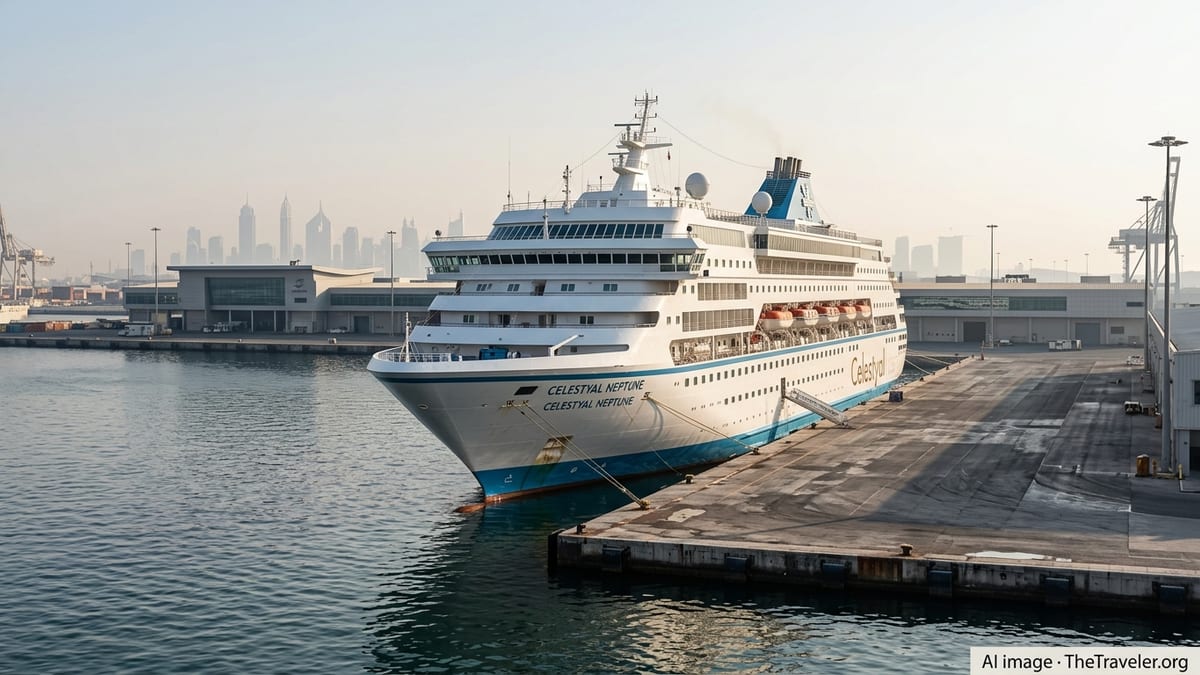
Greek Caution on Middle East Travel Ripples Into Cruise Planning
Greece’s Ministry of Foreign Affairs issued updated advice in late March 2026 recommending that Greek citizens avoid non-essential travel to the wider Middle East, including Gulf countries, in light of the regional security environment. According to the public notice, authorities cited heightened risks across multiple destinations, effectively aligning Greece’s stance with that of other Mediterranean states that have urged caution for trips touching conflict-adjacent areas.
While the advisory is formally directed at individual travelers, it is also influencing how Greek-linked tourism companies assess risk and deployment. Cruise lines are particularly exposed because many winter itineraries traditionally depend on Red Sea, Suez Canal and Arabian Gulf routes. Publicly available information shows that Celestyal, the Athens-based cruise brand known for Aegean and Eastern Mediterranean sailings, has been among the operators re-evaluating the balance between Middle East and European programs for upcoming seasons.
The Greek advisory comes after two years of rolling disruptions in and around the Red Sea, where a number of global cruise brands have either canceled calls or altered repositioning routes. Industry coverage notes that Celestyal has already been part of that wider trend, canceling select sailings and adjusting plans for its newer ships as security conditions evolved.
Celestyal’s Earlier Gulf Expansion Meets a Changed Security Landscape
Celestyal has spent the past several seasons expanding beyond its Aegean core, including a push into year-round operations that added a dedicated winter product in the Arabian Gulf. Trade and industry reports show that Celestyal Journey, the line’s larger flagship, was scheduled to homeport from Doha for successive winter seasons, operating seven-night “Desert Days” cruises, while Celestyal Discovery was earmarked for shorter Gulf itineraries from Abu Dhabi. These deployments were billed as a complement to the line’s classic summer focus on Greece and the Eastern Mediterranean.
Parallel to the Gulf program, Celestyal reintroduced and refreshed its popular “Three Continents” concept, combining ports in Greece, Turkey, Cyprus, Egypt and Israel. Cruise industry coverage indicated that Discovery would assume this itinerary during northern winter periods, creating a dual focus between Europe-adjacent and Middle Eastern routes. That strategy assumed stable passage through the Suez Canal and predictable security conditions across Eastern Mediterranean and Red Sea corridors.
However, security tensions and subsequent naval incidents in and around the Red Sea and Gulf area have undermined that planning framework. Reports from maritime trackers and specialist cruise media describe Celestyal Journey and Celestyal Discovery among the ships that altered or curtailed Middle East programs after a sharp escalation of hostilities in early 2026, with voyages canceled or shortened and vessels repositioned away from potential flashpoints.
Redirection Toward Mediterranean Winter Sailings
As the security equation shifted, Celestyal’s deployment pattern began to lean more heavily back toward the Mediterranean, including winter sailings. The company’s official website now prominently promotes seven-night winter Mediterranean cruises based out of Greece, marketed as “unforgettable and authentically Med” and positioned as a value-focused alternative for travelers seeking sunshine without committing to long-haul Gulf or wider Middle East itineraries. The emphasis on European ports such as Athens and key islands reflects a renewed confidence in the region’s relative stability for cruise operations.
Recent trade coverage also highlights fresh winter 2027–2028 programs aboard Celestyal Journey that are entirely centered on Europe and North Africa. New “Mediterranean Mosaics” sailings between Athens and Istanbul, plus extended combinations marketed as “Three Continents Explorer” voyages, focus on calls across Spain, Portugal, Morocco, France and Italy, reflecting a westward and northward pivot. These itineraries allow Celestyal to deliver multi-continent experiences using primarily Mediterranean and Atlantic gateways, reducing reliance on Red Sea transits or extended Gulf deployments.
This redirection does not remove the Middle East from Celestyal’s long-term roadmap, but it effectively reweights the portfolio. By anchoring more capacity in European waters during winter, the line can maintain year-round operations while responding to security advice from Greece and other European governments. It also capitalizes on growing interest in off-season Mediterranean cruising, where milder weather and lower crowd levels appeal to repeat cruise travelers.
Impacts for Travelers and Greece’s Wider Tourism Strategy
For passengers, Celestyal’s shift means more options for winter travel without navigating complex advisories or heightened insurance considerations linked to Middle East ports. Travel media reports indicate that Mediterranean winter sailings are being priced aggressively, which may make them attractive to price-sensitive markets such as the United Kingdom, Germany and Australia, where Celestyal has reported strong growth in recent years. Replacing some Gulf capacity with European itineraries also simplifies air connectivity, with Athens and other Mediterranean hubs offering dense networks of off-season flights.
From a Greek tourism perspective, heavier winter deployment in and around the country fits a broader effort to desaturate the peak summer months and spread visitor flows across the year. Cruise operators homeporting in Piraeus or using Athens as a key embarkation point help sustain hotels, guides and port services during traditionally quieter periods. According to publicly available Greek tourism plans, authorities have encouraged the development of shoulder- and off-season products that keep arrivals more evenly distributed, and winter cruises dovetail with that objective.
Industry observers also note that risk-conscious redeployments by cruise lines can reinforce perceptions of the Mediterranean as a relatively secure, well-regulated region for maritime tourism, even when geopolitical tensions flare nearby. For Greece, positioning itself at the heart of this safer alternative strengthens its role as both a source market and a strategic hub for cruise traffic, especially when regional operators like Celestyal visibly align their winter programs with European rather than Middle Eastern waters.
Ongoing Volatility Keeps Future Gulf Plans Under Review
Despite the current pivot, Celestyal and other cruise brands are unlikely to abandon the Middle East altogether. Gulf itineraries have drawn interest from travelers seeking new destinations and warm-weather escapes, and previous seasons in Qatar and the United Arab Emirates delivered positive commercial results. Cruise industry analyses suggest that operators will continue to watch security developments and governmental guidance closely, ready to restore or expand Gulf programs if conditions stabilize and travel advisories ease.
For now, however, the combination of official Greek advice against non-essential Middle East travel and the operational realities of navigating contested waterways weighs in favor of Europe-focused winter programs. Celestyal’s decision to foreground Mediterranean and adjacent European itineraries illustrates how one regional player is recalibrating in real time, emphasizing flexibility and risk management over rapid geographic expansion.
Travelers considering Celestyal cruises over the next several winters are likely to encounter a portfolio that is more Mediterranean-centric than early deployment plans suggested. The evolution of that portfolio will offer a barometer of how long current tensions continue to influence routing decisions, and how strongly Greece’s own guidance shapes the trajectory of a cruise line that has built its identity around the Aegean and the wider Mediterranean basin.
Hellenic Ministry of Foreign Affairs travel announcement